Neither method is objectively “better” — they trade off cost, control, and effort in different ways, and the right choice depends more on your situation (space, budget, local climate, privacy needs) than on skill level. Here’s how they actually compare.
Cost
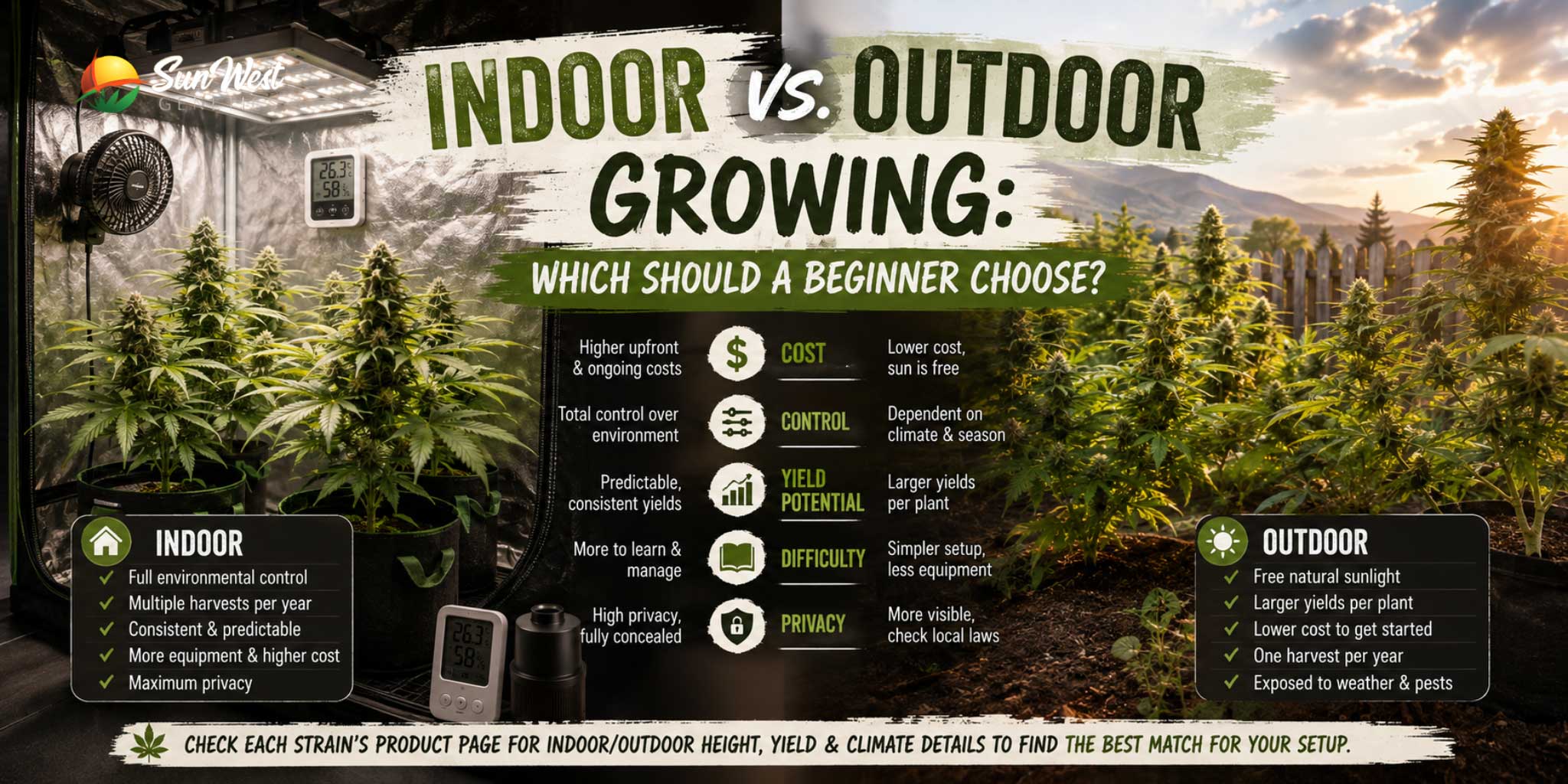
Indoor requires upfront investment: grow tent or dedicated space, lighting, ventilation/exhaust, and ongoing electricity costs. A basic setup can run from a few hundred to well over a thousand dollars before the first seed goes in.
Outdoor is dramatically cheaper — the sun provides free light, rain and native soil handle a lot of the watering and nutrition, and you’re not paying for a tent, fans, or lighting at all. Costs are largely limited to soil amendments, containers if not planting in-ground, and basic pest/deer protection.
Winner for budget-conscious beginners: outdoor, by a wide margin.
Control Over Environment
Indoor gives you full control: light schedule, temperature, humidity, and airflow are all adjustable, which means you can trigger flowering on your own timeline and run multiple harvests per year.
Outdoor puts you at the mercy of your local climate and season — you get exactly one outdoor harvest per year (in most climates), timed to the natural light cycle, and you have no control over rain, heat waves, or early cold snaps.
Winner for consistency: indoor.
Yield Potential
Indoor yields are typically more modest per plant but far more predictable and consistent, since you control every variable.
Outdoor plants, given enough space and a full season, generally produce significantly larger yields per plant than an indoor plant of the same strain — more root room, unfiltered natural sunlight, and a longer uninterrupted vegetative period all contribute to this.
Winner for raw yield per plant: outdoor, when conditions cooperate.
Difficulty for Beginners
Indoor requires learning to manage several interacting systems at once (light, ventilation, humidity, feeding) — more moving parts means more that can go wrong, but also more that you can fix quickly since you control the environment.
Outdoor is simpler in some ways (no equipment to manage) but leaves you exposed to things you can’t control — an early frost, an unexpected heat wave, or local pests and wildlife can undo a season’s work with no way to intervene.
Winner: genuinely depends on the grower — outdoor is easier logistically, indoor is easier to troubleshoot.
Privacy and Discretion
Indoor growing is inherently more private — nothing visible from outside your home.
Outdoor growing, even in a backyard, carries more visibility risk and is worth checking your local/state laws on setback distances, fencing, and visibility requirements before committing.
Which Strain Types Fit Each Setup
- Indoor: photoperiod strains work well since you control the light schedule and can keep plants compact through training; look for strains labeled with smaller indoor height in their strain specs.
- Outdoor: both photoperiod and autoflowering strains work outdoors — photoperiod strains benefit from a full natural season and can grow quite large, while autoflowers are useful for growers in short-season climates who need a strain that finishes fast regardless of daylight length.
Quick Decision Guide
| If you… |
Consider |
| Have a limited budget |
Outdoor |
| Want multiple harvests per year |
Indoor |
| Live somewhere with a short or unpredictable growing season |
Indoor, or autoflowers outdoor |
| Want maximum privacy |
Indoor |
| Have outdoor space and a long warm season |
Outdoor |
| Are okay troubleshooting equipment for more control |
Indoor |
Whichever setup you choose, check the indoor/outdoor height, yield, and climate details listed on each strain’s product page — matching a strain to your actual growing conditions matters more than the setup itself.
 ,
Canadian orders ship from Canada
,
Canadian orders ship from Canada
 .
.