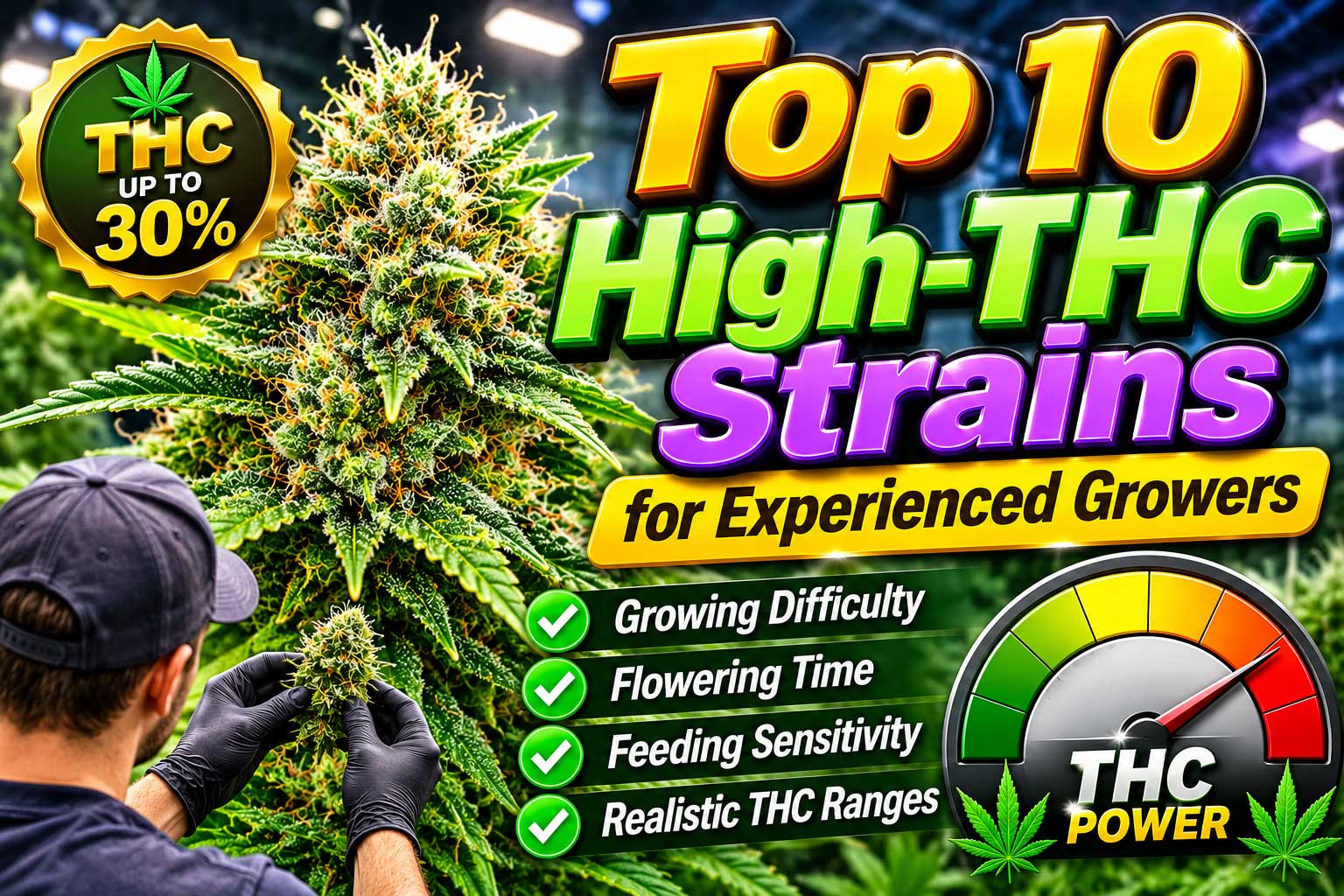
Potency genetics often come with trade-offs in growing difficulty, feeding sensitivity, or flowering time — worth understanding before choosing a strain on THC percentage alone.
What to Check Beyond the THC Number
- Growing-level rating — many of the highest-THC genetics carry a moderate-to-difficult rating, reflecting pickier feeding or environmental needs
- Flowering time, since some high-THC strains run longer than average to fully develop potency
- Feeding sensitivity notes, as high-THC genetics can sometimes be more prone to nutrient burn if overfed
- Realistic THC ranges, since published percentages are typically averages or peak lab results, not a guarantee for every individual plant
Who This List Is For
High-THC strains reward growers with prior experience dialing in feeding and environment — a first grow is usually better served by an easy-rated strain (see our beginner strain guide) before moving to potency-focused genetics.
Reading Lab-Tested THC Percentages
Strain listings showing lab-tested THC ranges reflect results from controlled grows — actual results depend heavily on your own growing conditions, harvest timing, and curing process.